


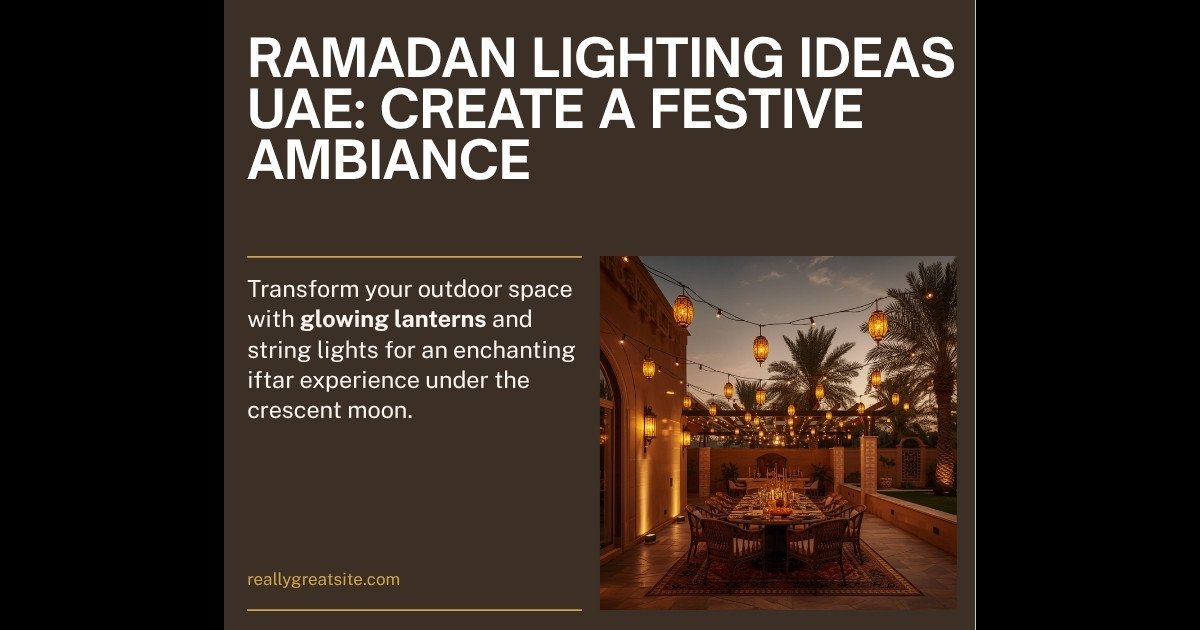
Ramadan transforms the rhythm of life in the UAE — and it transforms the way homes are used. Iftar gatherings, late-night suhoor, extended family visits that run past midnight, and the distinctive warm, contemplative atmosphere of the holy month all place specific demands on a villa’s lighting scheme.
This guide covers practical Ramadan lighting ideas for UAE villas and gardens: how to create the right atmosphere for iftar gatherings, which lighting elements have the most impact, and how to adapt your existing scheme for the month.
The Role of Lighting in Ramadan
Ramadan lighting in the UAE carries cultural weight beyond aesthetics. The crescent moon, the fanous (traditional lantern), warm golden light, and the sense of welcome and hospitality are all deeply embedded in the visual language of the month. Your villa’s lighting should reflect these qualities — warmth, generosity, and a sense of the special.
Practically, Ramadan shifts the primary use of the home to the evening and night. Iftar is the first meal after sunset, typically shared with family and guests. Suhoor (the pre-dawn meal) means the home is active late at night. Gardens and outdoor terraces are heavily used during the mild evenings of Ramadan (typically March–April in UAE latitude).
Indoor Lighting Ideas for Ramadan in UAE Villas
Set a Dedicated Iftar Scene
If you have a smart lighting system, programme a dedicated “Iftar” scene for the dining room and living spaces. The ideal iftar scene:
- Dining room pendants at 50–60% — enough light to see food clearly without the harshness of full brightness
- Cove lighting at 40–50% — warm ambient fill that lifts the ceiling without competing with the table
- Feature and niche lights at 60–70% — active and visible, adding richness to the space
- Downlights at 10–20% — almost off, used for soft fill only
The overall effect should feel warm, rich, and generous — like arriving at a well-appointed restaurant rather than a brightly lit canteen.
The Majles After Dark
During Ramadan, the majles (formal reception room) sees some of its most intensive use — extended family gatherings, receiving guests, post-iftar tea and conversation. The majles lighting should be set to its most atmospheric: chandelier at 40–50%, coves at 40%, feature lights active, downlights minimal.
For guests arriving for iftar, the entrance hall should be welcoming and bright — a “Reception” scene before transitioning to the intimate gathering mode as the evening progresses.
Decorative Lanterns and Crescent Lighting
Traditional Ramadan decoration in UAE homes includes fanous lanterns, crescent moon motifs, and warm decorative lighting. These don’t replace the main lighting scheme — they add a layer of seasonal identity. Warm-toned decorative LED string lights (2700K) draped over mantels, along bookshelves, or framing doorways add a festive touch that’s distinctly Ramadan without being garish.
Battery-operated LED lanterns in traditional shapes can be placed on dining tables, majles side tables, and outdoor surfaces. The key is warm white only — coloured fairy lights read as generic celebration rather than Ramadan-specific.
Garden and Outdoor Lighting for Ramadan Iftar Gatherings
UAE Ramadan (typically March–April) falls during ideal outdoor weather. Gardens, pool terraces, and outdoor seating areas see heavy evening use for iftar gatherings and late-night socialising. Outdoor Ramadan lighting should be generous but atmospheric.
Full Garden Activation
Activate all outdoor circuits for Ramadan evenings — garden uplights, pool lighting, bollards, and perimeter wall lights. The fully-lit garden provides the backdrop for outdoor gatherings and creates the sense of a special, prepared space.
For a CASAMBI system, create a “Ramadan Entertain” scene: uplights at 80%, pool lights active, bollards at full, wall washers at 60%. Save it and activate daily at iftar time.
Outdoor Seating and Pergola Lighting
The outdoor dining area or pergola is a central Ramadan gathering space. Overhead pendant or string lights on the pergola combined with table lanterns at the dining surface create the warm, restaurant-quality atmosphere that makes iftar outdoors feel special. Use warm white (2700K) throughout — the consistency of colour temperature across indoor and outdoor circuits ties the whole property together visually.
Crescent and Decorative Outdoor Elements
Many UAE villa owners add temporary decorative lighting for Ramadan — crescent and star motifs at the gate or entrance, string lights on garden trees, and illuminated decorative elements on the facade. These are most effective when they complement rather than clash with the permanent scheme. Warm white LED string lights work with almost any permanent garden lighting. Coloured LED rope lights are less successful alongside quality architectural lighting.
Smart Lighting Tips for Ramadan
Pre-Programme All Ramadan Scenes Before the Month Begins
Ramadan begins and the home immediately goes into intensive use. Programme your smart lighting scenes (Iftar, Suhoor, Reception, Garden Entertain) in the days before Ramadan starts — not during the month when time is limited. Test each scene during the day to confirm every circuit works as expected.
The Suhoor Timing
Suhoor (pre-dawn meal, typically 3–4am in UAE Ramadan) requires a moderate-to-functional light level in the kitchen and dining area — bright enough for meal preparation and eating, but not so harsh as to wake the household unnecessarily. A dedicated “Suhoor” scene — kitchen at 70%, dining at 40%, everything else off — is practical and considerate.
Sunset-Triggered Iftar Automation
Many CASAMBI and KNX systems support sunset-triggered scenes. Programme the outdoor garden and entrance lighting to activate automatically at sunset (iftar time) — so the garden is always lit when the first fast is broken, regardless of who is home or busy with preparation. This is one of the most-appreciated smart lighting features during Ramadan.
Preparing Your Villa’s Lighting Before Ramadan
If your villa’s current lighting scheme doesn’t have the warmth or flexibility needed for Ramadan entertaining, the month before is the time to make changes. Practical priorities:
- Audit colour temperature — replace any 4000K+ bulbs in dining, living, or majles areas with 2700K equivalents
- Add dimmer capability — a dining room on a single non-dimmed circuit is significantly less flexible than one on a dimmer
- Check outdoor circuits — ensure all garden lighting is functioning, and replace any failed fixtures before the month begins
- Consider adding CASAMBI — a CASAMBI retrofit to replace existing dimmer modules can be completed in 1–2 days and immediately gives scene control for the whole Ramadan period and beyond
For smart lighting system options, see our smart lighting Dubai guide.
Frequently Asked Questions
What lighting atmosphere is best for iftar gatherings in a UAE home?
Warm white (2700K) throughout, with cove and feature lighting active and downlights dimmed to a low fill level. The dining table area should be at 50–60% brightness — enough for comfortable eating, not so bright as to feel canteen-like. The overall effect should feel warm, generous, and celebratory rather than functional.
What are the best lighting decorations for Ramadan in Dubai villas?
Traditional fanous lanterns (battery or electric) in warm white, LED string lights at 2700K draped over mantels and bookshelves, and illuminated crescent motifs at entrances or gates. Warm white throughout — avoid coloured LED strings which read as generic rather than Ramadan-specific. Consistency with the main lighting scheme makes decorations look intentional rather than added-on.
Can I automate my iftar and suhoor lighting in Dubai?
Yes. CASAMBI and KNX systems support time-based and sunset-triggered scene changes. Programme an “Iftar” scene to activate at sunset automatically — so the garden and dining areas are always lit when the fast breaks, without anyone needing to remember to switch lights on. A “Suhoor” scene can be set on a timer for 3–4am activation.
When should I upgrade my villa lighting before Ramadan?
Ideally 4–6 weeks before Ramadan begins. This allows time for CASAMBI retrofitting (typically 1–2 days on-site), driver or bulb replacements, scene programming, and testing. Leaving it to the week before is risky if any supply items are on order. Check our current project calendar at Lofia Light for Ramadan-period availability.
Create the Perfect Ramadan Atmosphere with Lofia Light
Ramadan is when UAE families use their homes most intensively and with the most guests. It’s worth ensuring the lighting creates the atmosphere the month deserves. Lofia Light has been specifying and installing villa lighting across Dubai since 2018 — we understand the specific needs of UAE family homes and the role that Ramadan plays in how they’re used.
Book a free consultation before Ramadan 2027 — we’ll assess your current scheme and recommend what changes would make the most difference for your Ramadan hosting.
For a full room-by-room lighting approach, see our villa lighting design guide. For majles-specific lighting, see our majles lighting guide.